Maximizing Profitability: Understanding Return on Capital for Manufacturing and Product Line Businesses
In the competitive world of manufacturing and product line industries, efficient use of capital can be the difference between success and stagnation. Return on Capital (ROC) is a vital financial metric that every mid-sized manufacturing business should understand. ROC not only assesses how well your company generates profits from its capital investments, including both equity and debt, but it also serves as a key indicator of operational efficiency and sustainability.
Why ROC Matters for Manufacturing and Product Line Businesses
Manufacturing businesses often operate with significant capital investments, from machinery to inventory. Understanding how effectively this capital is used is crucial. ROC offers insights into how well a business is converting its invested capital into profit, providing a clear picture of overall financial health.
Key Components of Return on Capital
- Net Operating Profit After Tax (NOPAT):
- This figure represents the profit generated from core operations after taxes, but before interest payments. For manufacturers, this highlights the true profitability of day-to-day operations, excluding external financial factors.
- Invested Capital:
- Invested capital encompasses the total funds invested in the business, including both shareholders’ equity and borrowed funds. For manufacturing companies, this typically includes fixed assets like machinery and working capital, crucial for maintaining production lines.
Invested Capital can be calculated as:
- Fixed Assets + Working Capital, or
- Total Assets – Current Liabilities (excluding interest-bearing debt)
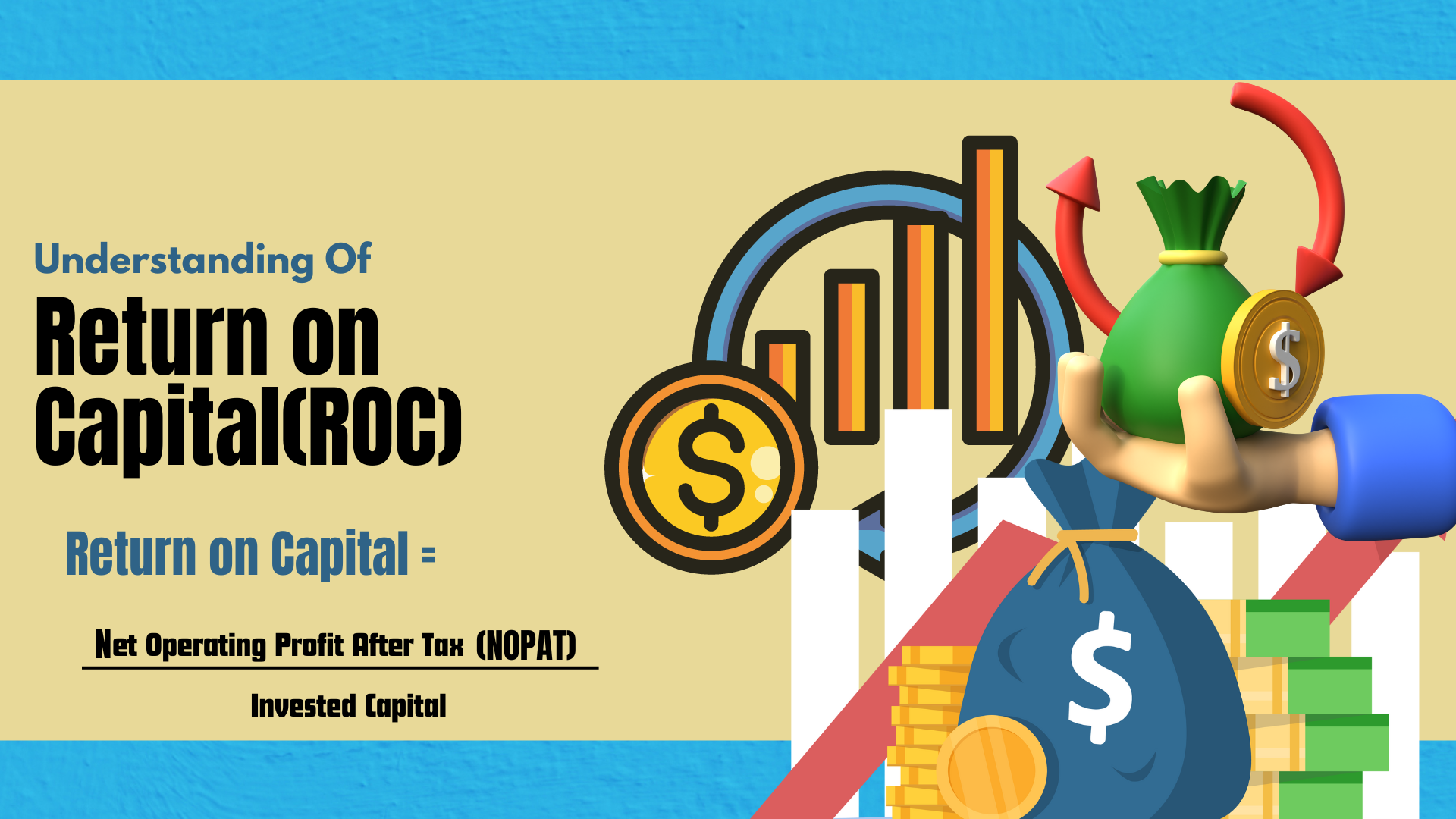
How to Calculate ROC:
Return on Capital=Net Operating Profit After Tax (NOPAT)Invested Capital\text{Return on Capital} = \frac{\text{Net Operating Profit After Tax (NOPAT)}}{\text{Invested Capital}}
This calculation offers a clear metric to determine how efficiently your business is using its capital to generate profits.
What ROC Tells You About Your Business
- High ROC: Indicates strong operational performance and effective capital management. For manufacturers, a high ROC means that the capital invested in machinery, inventory, and other assets is being used efficiently to drive profits.
- Low ROC: May point to inefficiencies, poor management decisions, or an underperforming business model. If your ROC is low, it may be time to reassess your operations or investment strategies.
The Importance of ROC for Mid-Sized Manufacturing Companies
- Attracting Investors:
- Investors are drawn to businesses with high ROC, as it signifies efficient capital use. A strong ROC can make your business more appealing to potential investors looking for reliable returns.
- Benchmarking Against Competitors:
- ROC allows you to compare your business’s performance with others in the manufacturing industry. This benchmarking can help you identify areas where you excel and those that need improvement.
- Enhancing Operational Efficiency:
- For manufacturing businesses, consistently high ROC is often a sign of strong management and efficient operations. It indicates that your production lines and capital investments are well-aligned with your profitability goals.
- Ensuring Long-Term Sustainability:
- Companies with a stable and high ROC over time are better positioned for long-term success. In manufacturing, where capital-intensive investments are common, maintaining a high ROC ensures that your business can reinvest in itself, pay down debts, and provide solid returns to shareholders.
ROC vs. Other Financial Metrics
- Return on Equity (ROE): While ROE focuses only on shareholders’ equity, ROC provides a more comprehensive view by including both equity and debt, giving a full picture of your company’s financial performance.
- Return on Assets (ROA): ROA measures how well a company uses its assets to generate profits. ROC, however, goes a step further by considering the capital structure, making it particularly relevant for manufacturing businesses with significant capital investments.
Considerations for Manufacturing Businesses
- Capital Intensive Nature: Manufacturing is a capital-intensive industry. ROC might naturally be lower, so it’s crucial to compare it within the same industry for accurate benchmarking.
- Impact of Accounting Practices: Variations in accounting methods can affect both NOPAT and invested capital, influencing ROC. Understanding these impacts is essential for accurate financial analysis.
Conclusion: Harnessing the Power of ROC for Your Manufacturing Business
For mid-sized manufacturing and product line businesses, understanding and optimizing Return on Capital is crucial for sustainable growth and profitability. By focusing on ROC, you can gain deeper insights into your company’s financial health, attract investors, and benchmark your performance against competitors. At BizTips, we specialize in helping businesses like yours maximize their ROC, ensuring that every dollar of capital is put to work effectively.
Ready to Optimize Your Business? Contact BizTips today to learn how we can help you enhance your return on capital and drive long-term success.